
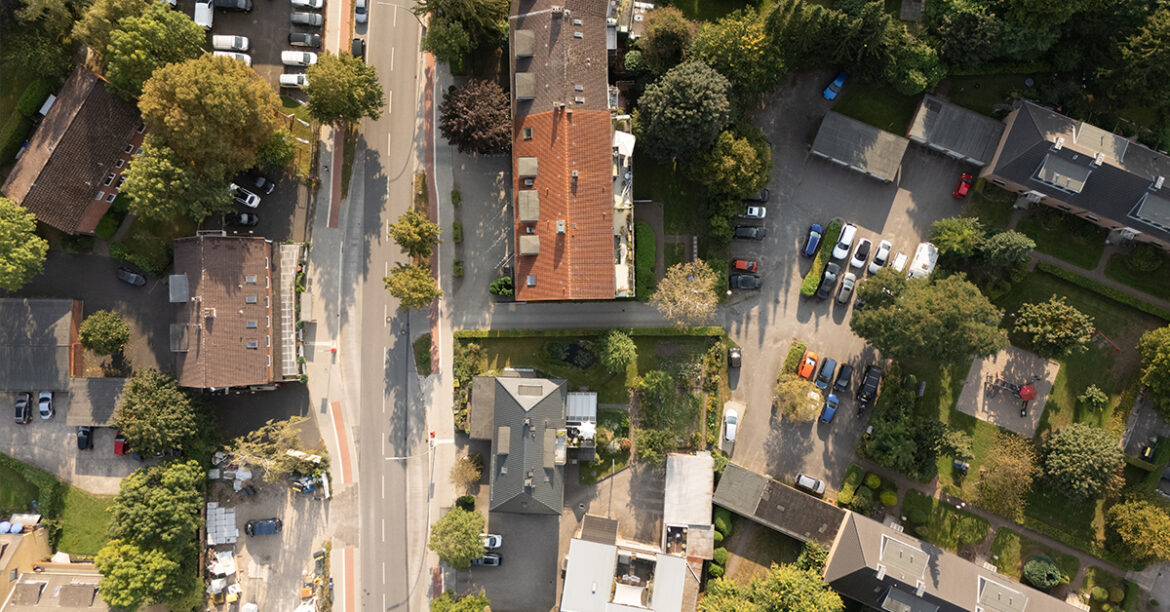
They may be invisible, but easements run throughout your community. What are they, and why do you need to understand them? At some point, nearly every board will encounter an issue that requires an analysis of easement rights to answer the question, “Can we do that?”
At its most basic level, if an association wants to do something on someone else’s property, it needs permission. An easement is a legal right that allows one party to use another party’s property for a specific, limited purpose. The easements contained on the community’s plat, in the governing documents, or sometimes in a separate easement agreement or other easement document, are written permissions that allow the association to use the other’s property for that certain purpose. This written permission allows the association to exercise its rights and carry out its obligations on the property without needing to get express permission from the current owner. Likewise, the association’s common area or common elements will be subject to the rights of others to use those areas.
There are a number of common easements in residential communities. The most common is the owners’ easement of enjoyment of the shared spaces. Even though the owner does not own the common areas of an HOA community and only owns an undivided share of the common elements in a condominium, the owner has the right to use the shared space for its intended purposes, typically subject to rules and/or other use restrictions set forth in the applicable governing documents. Communities also have utility easements to allow for electrical, water, telecommunications, and other equipment and infrastructure, as well as drainage or stormwater management easements to authorize the flow of water across property. In addition, your community has easements for ingress and egress throughout the community, as well as access to lots and units under certain conditions, such as for landscaping, pest control, or other maintenance and repairs. Commercial properties and mixed use developments will typically have additional easements for signage, parking facilities, outdoor or sidewalk use, shared amenities, and similar uses. Sometimes easements are granted only to owners, residents, and their invitees. Other times, easements are granted to the public.
Although the nature of an easement is often confusing, the critical takeaway is this: the party with the right to use an easement may only use it for the specific purpose granted. For example, an association may not use a landscape easement to enter onto a lot for a purpose unrelated to landscaping, such as installing a wall or signage, or for inspecting violations unless the easement includes those activities. Similarly, an easement for ingress and egress over the community’s roads is limited to coming and going. It does not grant the owner the right to use the roads for other purposes, such as holding a block party. For this reason, the board should seek the opinion of the association’s attorney before allowing any use of an area subject to an easement that is not expressly permitted by the easement language. Similarly, legal advice should be obtained if there is a concern that an action that the association wishes to take pursuant to its easement rights may be mismatched with the nature of its easement.
Boards must also be vigilant to ensure owners do not block or interfere with easements by installing fences, sheds, pergolas, landscaping, or other improvements in areas where easements have been given. A pergola built across the association’s access easement, for example, may make it impossible to access a lake or other area the association is required to maintain. Approving a structure to be built in a utility easement could subject the association to liability if the utility company later needs to remove the structure to install or service its equipment.
For these reasons, when reviewing architectural applications from owners and when considering board-initiated projects, boards should ensure that easement rights are not impaired. A working knowledge of easements helps board members protect access, reduce liability, and keep the community operating smoothly.