As the year comes to a close, community associations are planning ahead for 2026. This issue of CUP offers key insights to help your community step into the new year on the right foot. Whether you’re looking to understand condominium budget procedures, explore electric vehicle charging, or restore respect in your association, we have something for you! And for our readers in South Florida, please feel free to join us at the Cooperative Expo at the Broward County Convention Center on December 11, 2025. We hope to see you there!
With New Year’s festivities approaching, understanding how state law treats holiday fireworks can help communities manage expectations and avoid confusion. “A New Year’s Guide to Florida’s Holiday Fireworks Statute” by Joseph Markovich breaks down what qualifies as a “firework,” which items require permits, and how state provisions interact with local enforcement and private community covenants.
The condominium omnibus bill, which was adopted during the 2025 legislative session, amends Florida Statute 718.112 to explicitly allow condominium association meetings to be held by video conference. What does that mean for your association? Allison L. Hertz and Bryony G. Swift highlight the need for associations to review and update their meeting procedures as well as electronic-voting practices to ensure compliance with these new requirements in “New Laws for Condominium Meetings Held Via Video Conferencing.”
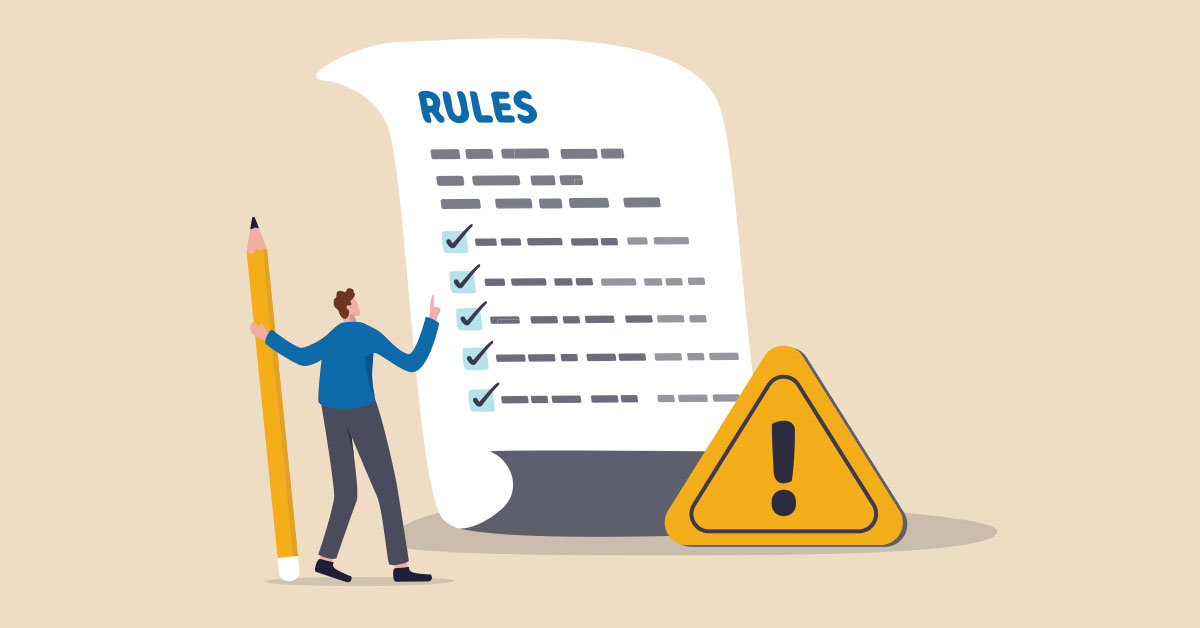
As community associations review their governing documents and consider updates for the coming year, understanding how to properly handle rules and rule changes is essential. In “Recording Rules and Rule Changes in the Public Records,” Joseph Arena describes when associations should consider placing their rules in the public records, the benefits and drawbacks of doing so, and why consulting legal counsel can help boards avoid inconsistencies.
Business decisions made by an association’s board of directors will generally be protected under the business judgment rule doctrine. Allison L. Hertz explains that Florida courts will not second-guess a board’s actions when the association has the authority to act, and the decision is reasonable, meaning it is not arbitrary, capricious, or made in bad faith, in “THIS CASE: Hollywood Towers Condominium Association, Inc. v. Hampton.”
Articles

A New Year’s Guide to Florida’s Holiday Fireworks Statute
By: Joseph Markovich
As New Year’s Day approaches, many Floridians are planning celebrations that may include fireworks. Readers may find it helpful to know that the legal landscape around fireworks has evolved over time, shifting from a period when most fireworks were restricted except under specific circumstances to the current more permissive stance. As a result of these changes, questions often arise about what qualifies as a “firework,” which items remain subject to permitting, and how the state’s provisions interact with local enforcement or private community covenants.

New Laws for Condominium Meetings Held Via Video Conferencing
By: Allison L. Hertz and Bryony G. Swift
The condominium omnibus bill, which was adopted during the 2025 legislative session, amends Florida Statute 718.112 to explicitly allow condominium association meetings to be held by video conference. “Video conference” is defined in the statute to mean any real time audio and video meeting between two or more people via audio and video enabled devices. The law adds new notice requirements for all meetings held by video conference, as well as requirements for recording these meetings and requirements for retention of recordings as official records of the association. Each meeting held by video conference must also include a physical location for those attendees who choose to attend in person.
Recording Rules and Rule Changes in the Public Records
By: Joseph Arena
Most condominium and homeowners’ associations have the right to adopt and to amend rules and regulations. The community declaration, articles of incorporations, and/or by-laws will often describe an association’s authority and procedures for adopting rules and regulations. Also, the Florida Statutes expressly give associations’ boards of directors the right to adopt rules and regulations concerning a few specific matters.
Hollywood Towers Condominium Association, Inc. v. Hampton
40 So.3d 784 (Fla. 4th DCA 2010)
By: Allison L. Hertz
The test that Florida courts use to determine the proper exercise of the business judgment rule is set forth in THIS CASE. The business judgment rule is a court doctrine that gives deference to decisions made by associations’ boards of directors.
In THIS CASE, the Association sued a unit owner to obtain a court order requiring the unit owner to provide access to her unit so the Association could perform repair work on the concrete floor of the balcony. The concrete floor of the balcony was a common element the Association was obligated to maintain.
The Association’s engineer inspected the balcony and found it had corrosion requiring repair. The engineer’s report concluded that demolition should be undertaken from inside the unit to remove the concrete four inches beyond the point at which the corrosion stops. In response, the owner’s engineer determined that there was no need to do any interior demolition work in the unit and that exterior restoration work was sufficient to make the balcony structurally sound.
The trial court denied the Association’s request for relief because “there is [a] clear question not only as to whether the [excavation] and rebar work is necessary, but whether the failure to perform it will cause immediate harm.” The Association appealed.
The appellate court examined the standard by which the trial court should review a decision of a condominium association’s board of directors. The Association argued the business judgment rule requires courts to defer to an association’s board of directors unless there is proof of fraud, self-dealing, dishonesty or incompetency in arriving at the decision. The unit owner argued the business judgment rule applies only in lawsuits against directors for personal liability, and that the trial court was required to determine whether the repair work on the interior of her unit was necessary.
Next, the appellate court noted that the business judgment rule has been applied by courts throughout Florida to decisions made by associations. It also stated that a court’s review of association decisions was limited to two issues: (1) did the association have the contractual or statutory authority to perform the act and (2) if that authority exists, were the board’s actions reasonable. However, the appellate court noted that no court in Florida had set out a test to use when reviewing association decisions.
The court adopted a test from California and held, “Where a duly constituted community association board, upon reasonable investigation, in good faith and with regard for the best interests of the community association and its members, exercises discretion within the scope of its authority under relevant statutes, covenants and restrictions to select among means for discharging an obligation to maintain and repair a development’s common areas, courts should defer to the board’s authority and presumed expertise.” In short, courts must defer to an association’s decision if it is within the association’s authority and it is reasonable.
So why does THIS CASE matter? Business decisions made by an association’s board of directors will generally be protected under the business judgment rule doctrine. Florida courts will not second-guess a decision or action of an association’s board of directors if the association has the authority to perform the action and if the decision or action is reasonable, and not arbitrary, capricious, or in bad faith. If you want to ensure the actions taken by your association and its directors will be protected, it is essential to contact your association’s counsel to make sure that your association has the authority to act and that it can substantiate that the action to be taken is reasonable.
Question of the Month
Q: Can you explain how a condominium association’s budget is made and presented? What is the difference between operating expenses and reserves? What are straight-line and pooled methods for reserves?
The New Reality for Condominium and Cooperative Associations

FLCAJ Magazine
By: James Robert Caves, III
Increased scrutiny of the structural conditions of buildings in Florida is the new reality for condominium and cooperative associations. This new reality includes both structural reserve obligations and the requirement from many associations to perform milestone inspections.
Every condominium and cooperative association in the state of Florida that operates a building of three or more habitable stories, as determined by the Florida Building Code, must complete a milestone inspection. The milestone inspection must be completed no later than December 31 of the year in which the building reaches 30 years of age and every 10 years thereafter. The obligation to obtain a milestone inspection was created by the legislature in 2022, and the initial deadline for existing buildings over 30 years of age was December 31, 2024. Therefore, many associations have already obtained their milestone inspections.
Community association boards and managers should ensure that their communities have adequate disaster planning measures in place as hurricane season approaches. To help you in weathering the storm, check out Becker’s Hurricane Guide which provides important tips and information to help protect your community.
For more information, contact your Becker attorney.
Announcing Becker’s On-Demand Class Library
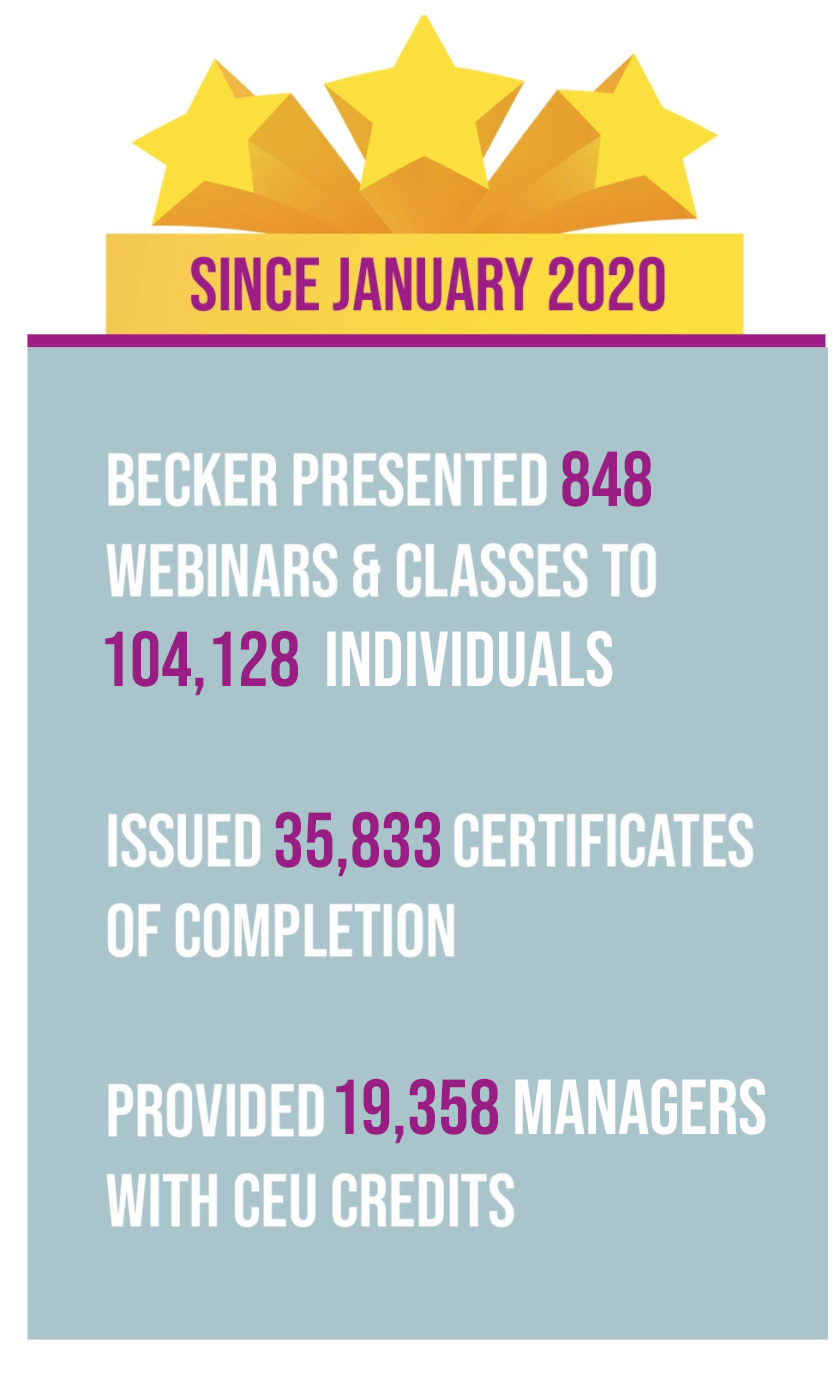
The Florida law mandates that board members of HOAs, Condominiums, and Co-ops take continuing education classes annually.*
Please see our on-demand class library for an extensive list of DBPR approved classes.

Managers and board members of non-clients are welcome to take our courses for $25, unless otherwise specified. Courses are always free for board members of firm clients.
*Breakdown of class requirements for board members and managers of HOA’s, Condominiums, and Co-ops: New Florida Educational Requirements for Board Members and Managers – Frequently Asked Questions
Frequently Asked Questions regarding Becker classes: Becker Classes FAQs


We Want to Hear from You!

Submit a testimonial about your experience with Becker for an opportunity to win a $50 giveaway. Selected testimonials may be featured on our website.
Can They Do That?
Becker’s “Can They Do That” video series tackles some of the unique problems that homeowners and renters face today. We answer your questions, no matter how far-fetched they may seem. From service animals to nudists in your community, we get to the bottom of it and let you know – “Can They Do That?”
Becker Steps Up to the Mic with Podcast,
‘Take It To The Board with Donna DiMaggio Berger’
Think you know what community association life is all about? Think again. Residents must obey the rules, directors must follow the law, and managers must keep it all running smoothly. Take It To the Board explores the reality of life in a condominium, cooperative or homeowners’ association, what’s really involved in serving on its board, and how to maintain that ever-so-delicate balance of being legally compliant and community spirited. Leading community association attorney Donna DiMaggio Berger acknowledges the balancing act without losing her sense of humor as she talks with a variety of association leaders, experts, and vendors about the challenges and benefits of the community association lifestyle. Don’t have a streaming app? You can now find all episodes on YouTube! Click here to listen now.
RECENT EPISODES:
-
- Safety at Your Fingertips with Geno Roefaro of SaferWatch
- Re-Release: Keeping Cool With Jane Gilbert, Chief Heat Officer, Miami-Dade County
- Why Every Contract Needs to Be Reviewed with Becker’s James Robert Caves
- Re-Release: Understanding How to Handle your Association’s Insurance Claim with Public Insurance Adjuster Ken Shriberg
- Screening Vendors and Service People for Enhanced Security
- Smart Hiring — Vetting Lawyers to Find The Perfect Legal Partner
- Going Green Saves Some Green — with Nicolas Milo of KW Property Management
- Monsters In The Walls — Pest Control Truths for Condos and HOAs
- Mind Your Manners: Restoring Respect in Condo, Cooperative and HOA Communities
- Why Solar Energy Makes Sense in the Sunshine State!
Mind Your Manners: Restoring Respect in Condo, Cooperative and HOA Communities
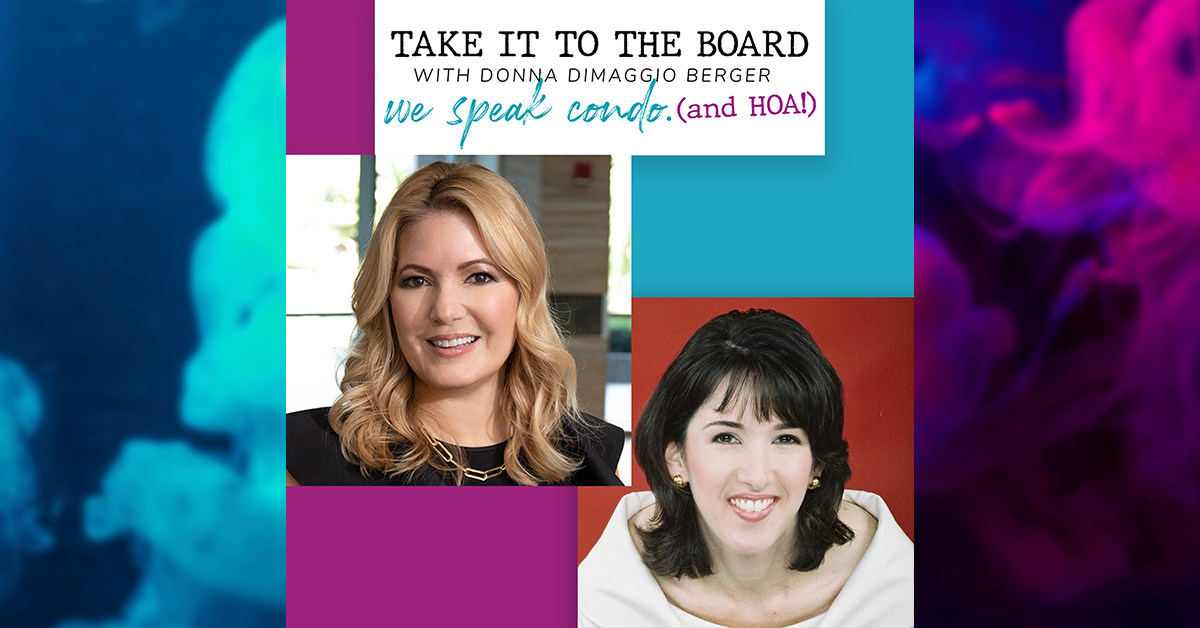
What if the secret to calmer board meetings, friendlier hallways, and fewer violation letters is simpler than passing another rule or regulation? In this episode of Take It To The Board, host Donna DiMaggio Berger invites nationally recognized etiquette consultant and author Jodi R.R. Smith to unpack how “etiquette is the younger sibling of the law” and why civility is a practical and effective leadership tool for all types of community associations. From trash cans set out too early to pickleball at midnight, Donna and Jodi translate everyday friction into neighborly fixes that work in real life.
The 2025 Cooperator Expo
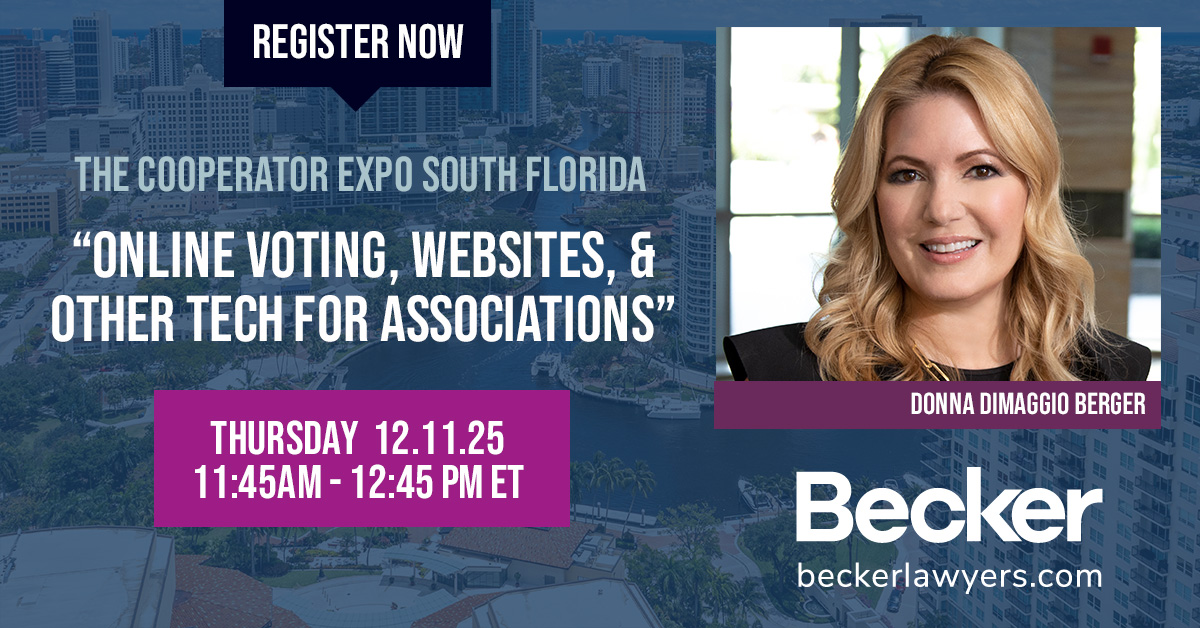
Becker’s Donna DiMaggio Berger is teaching a class at The Cooperative South Florida Expo on Thursday, December 11, 2025, at the Broward County Convention Center – 1950 Eisenhower Blvd, Fort Lauderdale, FL 33316.
Learn about electronic voting, website requirements, and AI applications in associations during Donna’s class, Online Voting, Websites, & Other Tech for Associations, at 11:45 in Seminar Room 2. Be sure to stop by and visit us at Booth 623!
Electric Vehicle Charging in Florida Condominiums: Material Alteration or Modern Necessity?

FCAP Managers Report
By: Jonathan R. Zim
As electric vehicles (“EV”) become increasingly common, condominium associations throughout Florida face new challenges. While state law provides a framework for EV Charging Stations on condominium property, several important questions remain unanswered—particularly when it comes to responsibilities of the unit owner and associations, and how those duties are shared when upgrades to the underlying electrical infrastructure are required.
DID YOU KNOW?
Becker & Poliakoff Earns Coveted National First-Tier Rankings in the 2026 Best Lawyers® “Best Law Firms” Guide
We are pleased to announce that Becker & Poliakoff ranked as a national first-tier law firm for our Construction Law, Construction Litigation, and Banking and Finance Litigation practice areas in the 2026 edition of the Best Lawyers® “Best Law Firms” guide. Becker was also nationally ranked in five other practice areas: Banking and Finance Law, Commercial Litigation, Corporate Law, Real Estate Law, and Real Estate Litigation.
In addition, the firm achieved regional rankings across 8 of its U.S. offices, including Fort Lauderdale, Fort Myers, Miami, New Jersey, New York City, Orlando, Tampa, and West Palm Beach.
If you have new members on your board or a new manager for your community and want them to be part of our Community Update, have them subscribe here:

EDITORS